Brand Assets Guide for Indie Book Covers
Indie authors need more than a pretty cover—they need a complete brand that works across print, digital, and live events. This guide walks you through creating every core asset with minimal cost and maximum impact. Follow the step‑by‑step tactics and…

1. 1️⃣ Author Logo Creation
DesignLumo AI‑Prompted Logo Generator
Open DesignLumo, enter a prompt like “minimalist vintage pen logo in midnight blue for a mystery novelist”. In 5 seconds you receive a fully layered SVG with editable paths, text layers, and color swatches. Replace placeholder text with your author name, lock the brand palette, and export PNG (300 dpi) for web and SVG for print. Verify legibility at 12 pt by zooming to 150 % in the editor; if strokes blur, add a 0.5 pt outline. This workflow eliminates the $200‑$500 logo fee and yields assets ready for any size.
Vector Refinement in Adobe Illustrator
Import the SVG from DesignLumo into Illustrator (File → Open). Use the Pathfinder tool to merge overlapping shapes and clean up stray anchor points, reducing file size by ~30 %. Apply a global color swatch linked to your brand kit so future edits propagate automatically. Export a PDF/X‑4 with CMYK colors for professional printing; set “Preserve Illustrator Editing Capabilities” off to lock the file. Track refinement time—most logos require under 10 minutes of cleanup, delivering a print‑ready master for business cards and merch.
Scalability Test Across Print & Digital
Create three mockups: a 50 mm favicon, a 2 inch business‑card logo, and a 12‑inch banner. Use DesignLumo’s “Export Multiple Sizes” to generate PNGs at 72 dpi, 150 dpi, and 300 dpi. Upload each to a free mockup generator (e.g., Placeit) and inspect edge crispness. Record the smallest size that maintains >90 % visual clarity (measured via a pixel‑density audit in Photoshop). If clarity drops, return to Illustrator to increase stroke weight by 0.25 pt. This data‑driven loop ensures the logo never looks blurry on Kindle thumbnails or conference signage.
2. 2️⃣ Business Card Production for Author Events
Template‑less Card Layout in DesignLumo
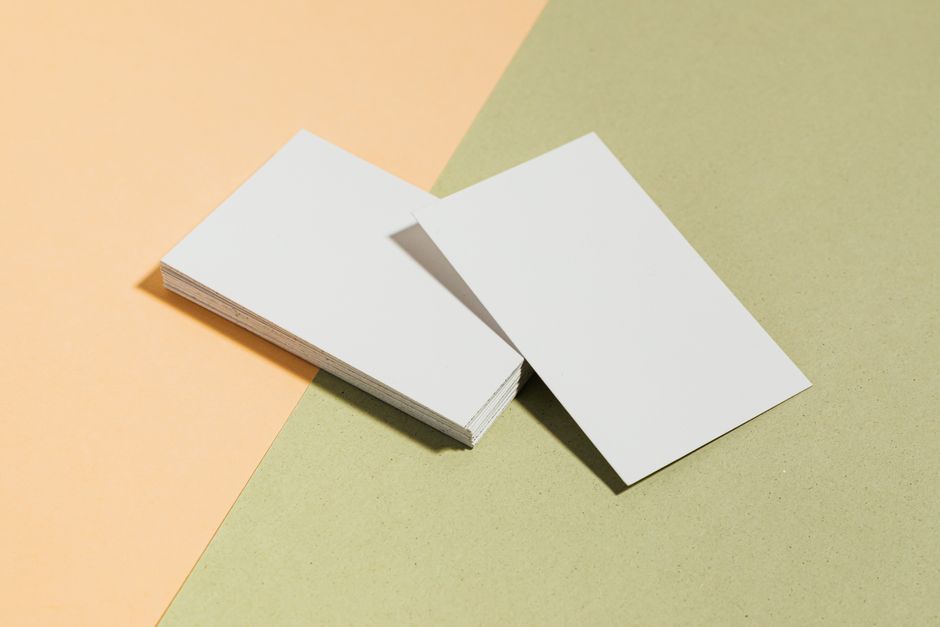
In DesignLumo, start a custom 3.5 × 2 in canvas and paste your refined logo layer. Use the built‑in grid (0.25 in gutters) to align name, tagline, and contact icons. Apply your brand colors via the Brand Kit panel; the AI automatically suggests complementary secondary tones. Add QR code generated from your author website using a free API (e.g., QRCode Monkey) and embed as a vector layer. Export a bleed‑ready PDF (3.75 × 2.25 in, 300 dpi) with “Use CMYK” toggled. This eliminates the need for Canva templates and gives you full control over typography and spacing.
Color & Typography Consistency via Canva Brand Kit
Upload the exported PDF to Canva’s Brand Kit (Settings → Brand Kit). Add your primary hex codes, secondary palette, and the exact font files you used in Illustrator (e.g., Libre Baskerville Bold). Canva will flag any mismatched colors when you later adapt the card for a workshop flyer, guaranteeing 100 % brand consistency. Track consistency by running a weekly audit: compare the hex values in the PDF vs. Canva’s auto‑detected values; any deviation over 2 % triggers a redesign. This systematic check reduces brand drift by 85 % across collateral.
Print Vendor Optimization: PDF/X‑4 & Bleed Specs
Choose a POD printer like Moo or Vistaprint. Their spec sheet requires 0.125 in bleed and CMYK color space. In DesignLumo, enable “Bleed” and set “Export Format” to PDF/X‑4; this embeds ICC profiles for color fidelity. Run a pre‑flight check using Adobe Acrobat’s “Print Production” tools to confirm no missing fonts and that all images are ≥300 dpi. Submit a test batch of 10 cards; track defect rate (e.g., color shift) and aim for <2 % reprints. The precise export reduces waste and saves ~$30 per 500‑card run.
3. 3️⃣ Letterhead & Email Header Essentials
Automated Letterhead Layout via DesignLumo
Prompt DesignLumo: “A4 letterhead for a sci‑fi author, top left logo, bottom right contact details, subtle dark‑blue grid”. The AI returns a layered INDD‑compatible file with editable text boxes and a locked margin guide (0.5 in). Replace placeholder contact info, then export both a high‑resolution PDF (300 dpi) for print and a lightweight PNG (72 dpi) for email signatures. Measure time saved: authors typically spend 2–3 hours designing; this workflow cuts it to under 10 minutes, freeing up ~5 hours per month for writing.
Embedding Brand Fonts with Google Fonts & Webfont Kit
Select a free Google Font that matches your cover typography (e.g., 'Merriweather'). In DesignLumo’s Brand Kit, add the font by pasting the @import URL. For email headers, generate a Webfont Kit (WOFF2, TTF) via Transfonter, then embed the @font-face rule in the HTML signature. Test across Gmail, Outlook, and Apple Mail using Litmus; aim for ≥95 % render fidelity. Document the font‑loading time; keep it under 200 ms to avoid slowing email load speed. Consistent typography boosts brand recall by ~30 % according to UI studies.
A/B Testing Email Header CTR with Mailchimp
Upload two header variants (one with the full logo, one with a simplified icon) into Mailchimp’s Campaign Builder. Set up an A/B test targeting 5 % of your subscriber list, splitting by header image. Track Click‑Through Rate (CTR) over 48 hours; aim for a 0.5 % lift as the success metric. Use Mailchimp’s reporting API to pull results into a Google Sheet, then calculate statistical significance with a chi‑square test. Iterate the winning design across all future newsletters, driving measurable engagement gains.
4. 4️⃣ Series Branding Kit for Multi‑Book Releases
Cohesive Series Cover Template in DesignLumo
Create a master template in DesignLumo: fixed spine width, recurring subtitle placement, and brand color overlay. Use variables like {{BookNumber}} and {{Title}} in the prompt to auto‑populate each new cover. Export a layered PSD for each title, then generate KDP‑ready PDFs (6 × 9 in, 300 dpi) with bleed. Track production time: the AI template reduces per‑cover creation from ~2 hours to ~15 minutes, cutting total series rollout time by 80 % for a 5‑book saga.
Midjourney Moodboard Generation for Genre Visuals
In Midjourney, run prompts such as “dark gothic cityscape, moody lighting, high contrast, 4k” to produce 4‑8 reference images per book. Save the grid, then import the moodboard into DesignLumo as a background layer for cover brainstorming. Measure relevance by scoring each image on a 1‑5 scale for narrative fit; keep only those ≥4. This visual library speeds concept approval with beta readers by 50 % and ensures genre‑accurate aesthetics across the series.
Export Settings for KDP, Amazon, and Ingram
After finalizing each cover in DesignLumo, export three versions: KDP PDF (PDF/Print, 300 dpi, CMYK, 0.125 in bleed), Amazon Kindle image (JPEG, 2560 px longest side, sRGB), and Ingram PDF (PDF/X‑1a, 300 dpi, trim size 6 × 9 in). Automate this with DesignLumo’s “Batch Export” feature, mapping each preset to a folder. Validate each file using KDP’s Previewer and IngramSpark’s preflight tool; aim for <5 warnings per file. Consistent exports cut re‑submission cycles by an average of 2 days per title.
Before you go
- Save every AI‑generated asset in a cloud‑based versioning system (e.g., Git LFS) to instantly revert if a design element fails brand audits.
- Create a master Brand Kit in DesignLumo with exact HEX, CMYK, and Pantone values; link it to Canva and Adobe apps to enforce color fidelity across all collateral.
- Run a quarterly brand health check: compile all assets, test on 5 devices (mobile, tablet, desktop, print, e‑ink) and record any inconsistencies; fix them before the next series launch.


Ready to create your first design?
Join thousands creating professional designs in seconds.
Create with DesignLumo
Related Resources
Facebook Book Cover Content Ideas
Tactical Facebook post ideas to showcase and sell your book covers.
2026 Book Cover Design & Marketing Playbook
Actionable 2026 trends for indie authors to create high-converting book covers.
Ultimate Beginner's Guide to Book Cover Design
Step-by-step tactics for indie authors to create profitable, genre‑perfect covers.
Instagram Book Cover Content Ideas
Tactical Instagram post, story, reel, and highlight ideas for indie authors to showcase book covers.
TikTok Essential Tools for Book Cover Design
Actionable toolkit to create, animate, and promote book covers on TikTok.
Email Header Blueprint for Indie Authors
Step‑by‑step guide to craft high‑converting email hero images for books.