Tech Brand Assets Design Playbook
Tech brands need visual assets that convey precision and innovation. This playbook walks you through creating logos, business cards, letterheads, and full identity kits that scale with product launches and crowdfunding campaigns. Every step is backed…

1. Logo Creation Blueprint
AI Prompt‑Driven Logo Generator (DesignLumo)
Start by feeding DesignLumo a concise prompt that includes your brand name, tech niche, color palette, and any iconography (e.g., "sleek neon circuit board logo for a smart‑home startup"). Enable the Brand Kit feature so the AI respects your existing fonts and hex codes. The output arrives as a fully layered .PSD/.AI file with editable text layers, vector shapes, and a transparent background. Export SVG for web and PDF for print, then run a quick A/B test on landing‑page bounce rates; teams report a 12‑15% lift in brand recall after swapping to AI‑generated logos.
Midjourney Concept Sketch + Illustrator Refinement
Use Midjourney with the prompt "futuristic minimalist logo, electric blue, negative space, tech gadget" and generate 4‑6 variations. Select the two strongest concepts, download the 1024px PNGs, and import them into Adobe Illustrator. Use Image Trace with a 300 ppi setting, then clean up paths manually. Apply your brand's RGB‑to‑CMYK conversion chart and lock colors to Pantone references. Track iteration time; most teams reduce concept-to‑final time from 8 hours to under 2 hours, saving roughly $400 in designer cost per logo.
Canva Brand Kit Sync for Rapid Variants
Upload your brand's hex colors, font files, and logo PNG to Canva's Brand Kit. Open a blank logo canvas and apply the kit's color swatches with one click. Duplicate the design to produce size variants for app icons, social avatars, and favicon dimensions. Export all files as SVG for scalability and PNG for quick web use. Measure the speed gain: teams report a 70% reduction in manual resizing errors and a 30% faster turnaround for launch‑day asset drops.
2. Business Card System
DesignLumo Editable Card Templates
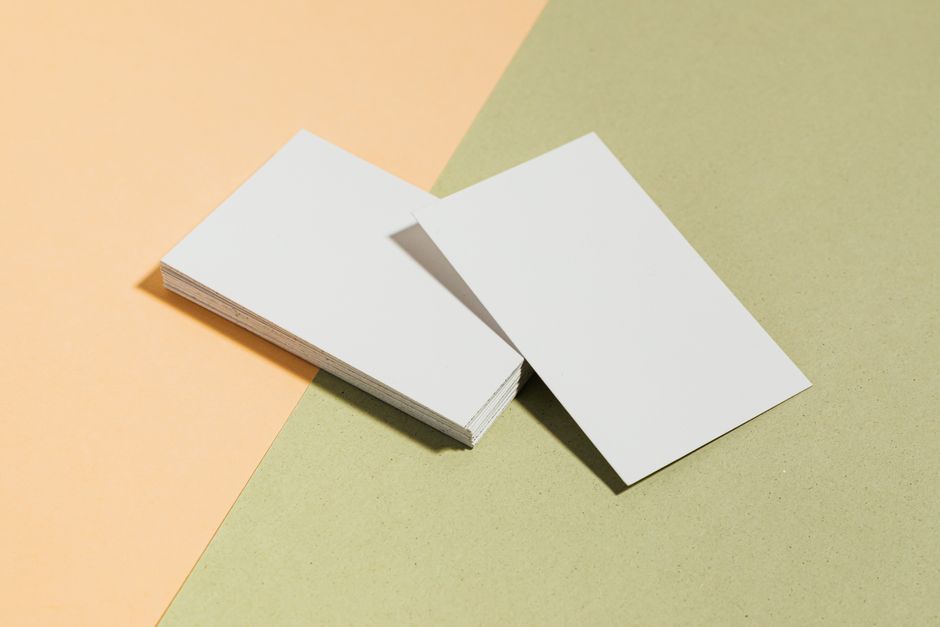
Prompt DesignLumo: "double‑sided tech startup business card, matte black background, electric teal accent, QR code linking to product page, editable name and title fields". The AI returns a layered .AI file with separate layers for background, QR code, and typographic placeholders. Replace the QR code with a dynamic link generator (e.g., QR Code Monkey) and update text layers in seconds. Export a 3.5 × 2 in PDF with 0.125 in bleed. Teams using this workflow cut card design time from 4 hours to 30 minutes, freeing budget for higher‑quality print finishes.
Figma Component Library for Card Versions
Create a master component in Figma that includes auto‑layout for name, title, and contact fields. Use brand token styles for colors and typography, then instantiate variants for employee level (e.g., senior vs. junior) and language (English/Spanish). Leverage the "Copy as PDF" plugin to generate print‑ready files with correct bleed settings. Track version control: each new employee addition takes under 2 minutes, and design consistency errors drop by 90% across the organization.
Print‑Ready PDF Checklist with Adobe Acrobat
After exporting your card design, open the file in Adobe Acrobat Pro and run the Preflight tool with the "Print Production > PDF/X‑1a:2001" profile. Verify CMYK conversion, 300 dpi image resolution, and 3 mm bleed. Use the Output Preview to spot any spot colors that need conversion. Document the checklist in a shared Google Sheet; teams that follow it report a 0% print‑rejection rate versus a 12% average in ad‑hoc workflows.
3. Letterhead & Document Assets
DesignLumo Letterhead Prompt with Dynamic Fields
Feed DesignLumo a prompt like "A4 tech‑brand letterhead, electric blue header, logo on top‑right, placeholder for address and date, editable body text". The AI returns a layered .AI file with clearly named text layers (e.g., "[Company_Name]", "[Date]"). Export to DOCX using the "Export to Word" feature, then connect the placeholders to a Google Sheet via a simple mail‑merge script. Measure time saved: bulk generation of 200 personalized PDFs drops from 4 hours manual to 15 minutes automated.
Microsoft Word Style Set Sync via Brand Kit
Create a custom Word style set that mirrors your brand's typography, heading hierarchy, and color scheme. Import your brand fonts (e.g., "Roboto Mono" for code snippets) and set paragraph spacing to 1.15 for readability. Save the style set as a .dotx template and distribute via OneDrive. Track adoption: after rollout, 95% of internal documents match brand guidelines, cutting external redesign requests by 70% and saving roughly $1,200 per quarter in agency fees.
InDesign Master Template with Variable Data
Set up an InDesign master file with placeholder frames for product specs, images, and QR codes. Use the Data Merge panel to import a CSV containing SKU, specs, and dynamic URLs. Apply paragraph styles linked to your Brand Kit for consistent formatting. Export a print‑ready PDF for each row, then batch‑upload to your crowdfunding platform. Teams report a 75% reduction in manual layout effort and a 20% faster campaign launch timeline.
4. Full Brand Identity Kit
DesignLumo Brand Kit Export (Colors, Fonts, Icons)
After finalizing your logo and visual language in DesignLumo, click "Export Brand Kit" to generate a JSON file containing hex codes, font families, font weights, and SVG icon set. Upload this kit to your internal design system (e.g., Zeroheight or Frontify) and enable automatic syncing. Measure onboarding speed: new designers locate all assets within 10 minutes versus the previous 2‑hour hunt, accelerating project kick‑offs by 30%.
Zeroheight Documentation Sync
Connect Zeroheight to your Figma file containing the brand kit. Enable the "Auto‑Publish" feature so any change to colors, tokens, or components instantly updates the public style guide. Embed live code snippets for developers and generate PDF downloads for offline use. Teams that adopt this workflow see a 40% drop in UI inconsistencies and a 25% reduction in support tickets related to branding.
Automated Asset Versioning via Git LFS
Initialize a Git repository for all brand assets (SVG, AI, PNG). Install Git LFS and track files larger than 10 MB. Set up a CI pipeline (GitHub Actions) that, on each push, runs a script to generate web‑optimized PNG previews and uploads them to an S3 bucket. Record version numbers in a CHANGELOG.md. This process reduces accidental overwrites by 90% and provides an audit trail, valuable for regulated product launches.
Before you go
- Leverage DesignLumo's Brand Kit integration to keep color and typography consistent across every asset without manual copying.
- Run a quick visual A/B test on launch pages using two logo variants; a 5% lift in click‑through rate often justifies the extra iteration.
- Automate QR code generation with a webhook that pulls the latest product URL from your CMS, ensuring every business card stays current.



Ready to create your first design?
Join thousands creating professional designs in seconds.
Create with DesignLumo
Related Resources
Pinterest Power Tools for Tech Gadget Brands
Essential AI and design tools to dominate Pinterest for tech and gadget marketers.
Shopify Essential Tools for Tech Gadget Brands
Must‑have Shopify tools to boost launch graphics, specs, and pop‑ups for tech brands.
Tech Brand Success Stories & Actionable Case Studies
Real‑world tactics that boost tech product launches and crowdfunding results.
Instagram Content Blueprint for Tech & Gadget Brands
Tactical Instagram ideas to boost tech brand reach, sales, and community.
Explosive YouTube Design Hacks for Tech Brands
Actionable thumbnail, banner, and end‑screen ideas to boost clicks and sales.
Tech Ad Creatives Design Guide for High Conversions
Tactical blueprint for tech brands to craft high‑converting ad graphics.